


Roof assembly basics
By The Coffee Shops™.
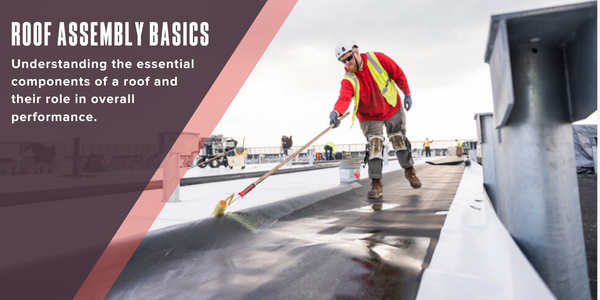
Understanding the essential components of a roof and their role in overall performance.
A roof is far more than just the outermost layer of what can be seen with the naked eye; it is a complex system carefully engineered to provide protection, ensure energy efficiency and, in some cases, support additional structures like solar arrays or green roofs. For roofing professionals, understanding the components of a roof assembly is essential to designing, installing and maintaining a system that performs effectively over time. In a recent article, “Back to the Basics (Part 2): What is a Roof Assembly?,” the Single Ply Roofing Industry (SPRI) dove into this topic.
Defining a roof assembly
The article opened by establishing the basics – what exactly is a roof assembly? It referenced the 2024 International Building Code (IBC), which defined a roof assembly as a system designed to offer weather protection and resistance to design loads. It went into further detail to note that a roof assembly includes a roof covering and roof deck or a single component serving as both the roof covering and the roof deck, with the option of also having underlayment, insulation and vapor retarders. Each of these layers plays its own role:
- The deck: All of these different layers, both required and optional, are built upon the roof deck. In this way, the roof deck is the foundation of a roof. These decks are often made from materials such as steel, concrete or plywood, with the choice depending on the building type and the specific load requirements.
- Insulation: The insulation layer is another critical component, responsible for regulating thermal performance and reducing heat transfer. Proper insulation helps maintain a consistent indoor temperature and lowers energy costs, making it a vital part of energy-efficient roof systems.
- Waterproofing: Installed on top of the insulation, a weatherproofing layer, usually composed of waterproof membranes, safeguards the building from moisture infiltration, protecting the interior from water damage. This outer layer, which can include materials such as modified bitumen, PVC, EPDM or TPO, also enhances durability and shields the roof from external elements like wind, UV radiation and harsh weather conditions.
Modern advancements in assemblies
The article then went into the recent evolutions of roof assemblies as technologies and materials designed to meet modern performance standards and environmental regulations have been developed. For example, vapor and air barriers are now frequently added to manage moisture migration and improve the overall functionality of the building envelope. These innovations not only prevent condensation, which can lead to material degradation, but also contribute to the long-term durability of the roof system.
Additionally, green roofing systems — complete with vegetation layers — have gained popularity, offering natural insulation and aiding in stormwater management. Photovoltaic (solar) systems are also increasingly integrated into roof designs, allowing buildings to harness renewable energy and reduce their environmental impact.
Learn more about SPRI in their Coffee Shop Directory or visit www.spri.org.
Recommended For You

NWIR busca a los futuros líderes de la industria a través del programa BOOTS
Read More ...
The Impact of the Industry-wide Roofing Material Shortage
Read More ...
4 reasons why people are choosing to take on more fixer-uppers
Read More ...
UP TO THE MINUTE





Comments
Leave a Reply
Have an account? Login to leave a comment!
Sign In