

Tips for Successful Metal Roof Flue and Pipe Penetration on Commercial Systems
By Dani Sheehan.
Don’t let poor pipe penetration locations and installation compromise the life of a metal roof.
One of the most compromising parts of a metal roof’s performance is when pipe or flue penetrations are improperly installed to accommodate other building systems. If you are offering commercial metal roofing services or looking to add them to your business, make sure you know how to properly install pipe and flue penetrations. Below are a few tips to add to your success.
1 – Learn proper installation
As with any aspect of the roofing system, it’s important that you’re qualified to install the element, to help avoid leaks, building damage and other unnecessary expenses; this applies to cutting and installing appropriately flashed and booted pipe penetrations. If you are looking to add metal to your roofing skill base, you also might consider enrolling in MCBI’s Installer Certification Training Courses for hands on installation training.
2 – Use the right materials
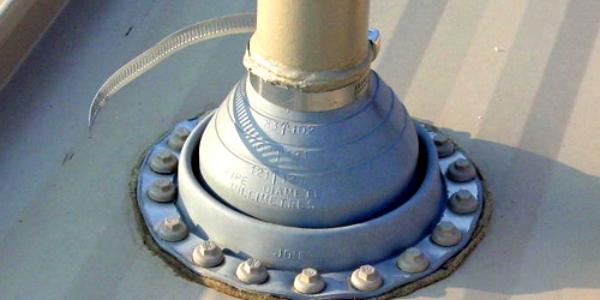
It’s so important to use the right material! Residential type roof jacks won’t last over time compared to rubber roof jacks made specifically for metal roofs. Proper commercial roofing products combine an EPDM rubber boot with a band made of bonded aluminum to allow for a compression seal at the roof panel. You also want to avoid materials like copper, lead and galvanized metal roof jacks that can corrode the metal roof system. The entire system is only as secure as the shortest life of its products. You’ll want to only use tape and caulk sealants approved by the manufacturer and long-life fasteners for any exposed fastener applications to avoid reducing the life of the entire system.
3 – Assess proper roof flue and pipe penetration locations
Before creating a penetration, ensure it can be properly sealed and does not have any immediate obstructions that might compromise the performance of the pipe or flue penetration. Some areas to keep in mind include:
- Choose a location for the roof penetration on a smooth or flat area of the roof’s surface.
- Find a location that has the least amount of water drainage around it to place the penetration.
- Don’t allow a pipe location to block the flow of water and create unnecessary buildup.
Learn more about MBCI in their Coffee Shop Directory of visit www.mbci.com.
About the author

Dani is a writer for The Coffee Shops. When she's not writing or researching, she's exploring new hiking trails or teaching yoga classes.
Recommended For You

Build skills and business strength at HNA 2026
Read More ...
ServiceTitan partners with Metallica’s All Within My Hands to support workforce education
Read More ...
How Do You Achieve Quality Estimates
Read More ...
UP TO THE MINUTE





Comments
Leave a Reply
Have an account? Login to leave a comment!
Sign In