


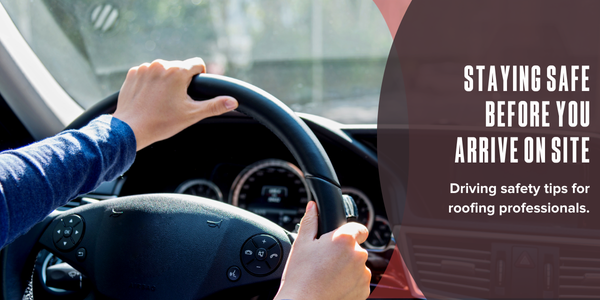
Staying safe before you arrive on site
By Cotney Consulting Group.
Driving safety tips for roofing professionals.
Roofing is a demanding trade, full of high-risk tasks, from working at heights to handling hot materials and sharp tools. However, one of the most overlooked dangers in the roofing industry happens before the first ladder is even set, and it isn't easy to get to the job site safely.
Driving is a routine part of a roofer's day, whether you're hauling trailers, navigating crowded residential streets or rushing across town to pick up materials. And yet, too many accidents happen en route not because of poor road conditions but because of preventable errors: distractions, fatigue, poor vehicle maintenance or simply rushing.
In roofing, safety doesn't begin on the roof; it starts on the road.
Why driving safety matters in roofing
Roofing crews often operate under tight schedules. Between project timelines, material deliveries and traffic stress, it's easy to let safe driving habits slip. But a single driving incident can derail your day and much worse:
- Injuries or fatalities to employees or the public
- Damage to expensive tools and materials
- Delays and lost productivity
- Insurance hikes and legal liability
- Reputation damage for your business
Driving may feel separate from roofing operations, but it's a major liability and entirely within your control.
Defensive driving starts with preparation
Before any roofing vehicle hits the road, preparation is key. Here's what every roofing contractor should implement:
1 - Daily vehicle inspections
Every driver should perform a pre-trip check. Look for:
- Tire condition and pressure
- Fluid levels (oil, coolant, windshield washer)
- Functioning lights, blinkers and brake lights
- Secure ladders and materials on racks or trailers
- Clear windshield and mirrors
Minor issues like low tire pressure or a loose strap can lead to significant hazards.
2 - Load securement
Roofers transport bulky or heavy materials like shingles, rolls or decking. These must be appropriately secured:
- Use straps, racks or netting
- Ensure the load does not obstruct visibility
- Follow DOT guidelines if hauling over certain weight limits
A single falling bundle of shingles could cause a deadly road hazard.
Driving smart in roofing conditions
Roofing companies face specific driving scenarios that raise risk levels. Here's how to stay safe under those conditions:
Urban and residential areas
- Drive slowly and watch for children, pets and cyclists
- Avoid blocking driveways or hydrants
- Use spotters when backing into narrow driveways
Construction zones and busy highways
- Follow posted speed limits
- Merge early and anticipate delays
- Stay alert for aggressive drivers or sudden stops
Weather conditions
- Reduce speed in rain, snow or fog
- Leave extra braking distance
- Postpone departure if severe weather makes roads dangerous
Crews often get caught in early morning or late afternoon commutes. Patience and planning go a long way.
Avoiding the big three: distraction, fatigue, speed
The three biggest driving threats in construction transportation are:
1 - Distracted driving
Phones, food, music or even a clipboard on the passenger seat can distract a driver long enough to cause an accident.
Solutions:
- Use hands-free communication only when stopped
- Pre-program GPS before departure
- Set a company policy: no texting, no phone use while driving
2 - Fatigue
Roofers often start early and work long hours in physically draining conditions. Driving home while exhausted is a real danger.
Solutions:
- Rotate driving responsibilities among the crew
- Encourage quick breaks and hydration
- If possible, delay travel if alertness is compromised
3 - Speeding
Trying to make up time or get to the next job faster? Speeding increases the risk of accidents and reduces stopping distance.
Solutions:
- Build extra time into travel plans
- Incentivize safe driving over "fast" driving
- Remind crews that one minute saved isn't worth a lifetime of consequences
Company-wide policies that promote safe driving
Roofing contractors should establish a fleet safety policy that covers the following:
- Driver qualification and training
- Drug and alcohol testing policies
- Reporting and investigation of all incidents
- Vehicle inspection and maintenance records
- Consequences for policy violations
Additionally, consider implementing telematics (GPS tracking) to monitor speed, hard braking and route history, not to "police" your team but to identify risky patterns and provide coaching.
When an accident happens: Be ready
Despite all precautions, accidents can still occur. Every roofing truck should be equipped with:
- First aid kit
- Emergency contact list
- Vehicle registration and insurance info
- Basic accident reporting form and pen
- Roadside flares or reflectors
Train your team on what to do after a collision:
- Pull off the road safely
- Check for injuries
- Call 911 if needed
- Document everything with photos and notes
- Notify the supervisor or office immediately
Arrive alive, work safer
Every roofing project starts with transportation. If your crew doesn't arrive safely, nothing else matters. By putting the same level of focus into driving safety as you do into fall protection or material handling, you reinforce a company-wide culture of care and professionalism.
Staying safe doesn't begin at the roof's edge; it starts behind the wheel. And when every roofer drives with caution, awareness and purpose, they protect themselves and everyone around them.
So before you climb a ladder or sling a bundle, take a moment to drive smart. Because the safest job is the one you arrive for.
Learn more about Cotney Consulting Group in their Coffee Shop Directory or visit www.cotneyconsulting.com.
Recommended For You

Preventing Heat-Related Illness and Injury
Read More ...
OSHA’s heat illness prevention rulemaking advances: Implications for the roofing industry
Read More ...
What Qualities Does a Safety Leader Possess?
Read More ...
UP TO THE MINUTE





Comments
Leave a Reply
Have an account? Login to leave a comment!
Sign In