


From Læsø to Jiāodōng : The global legacy of seaweed roofing
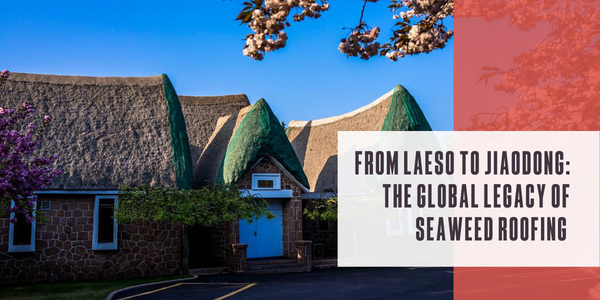
By Emma Peterson.
With examples still standing after hundreds of years, seaweed-roofed structures showcase remarkable durability, natural insulation and environmental benefits.
Historically, humans have built homes out of the materials around them, often using grasses and other fibers as a roofing material. In an article for the Journal of Asian Architecture and Building Engineering, Yi Liu, Weijun Gao and Xintian Wang explained the benefits of using these types of coverings on buildings:
[These natural roofs are] not only highly regional but also low-carbon and energy-saving and embod[y] the wisdom of early human beings to comply with nature and the environment.
Examples of these types of roof coverings include grasses, straws and even seaweed. Yes, you heard that last one right – across the world multiple cultures historically turned to the ocean for building materials, and you can still find many of these structures still standing today.
 Læsø, Denmark
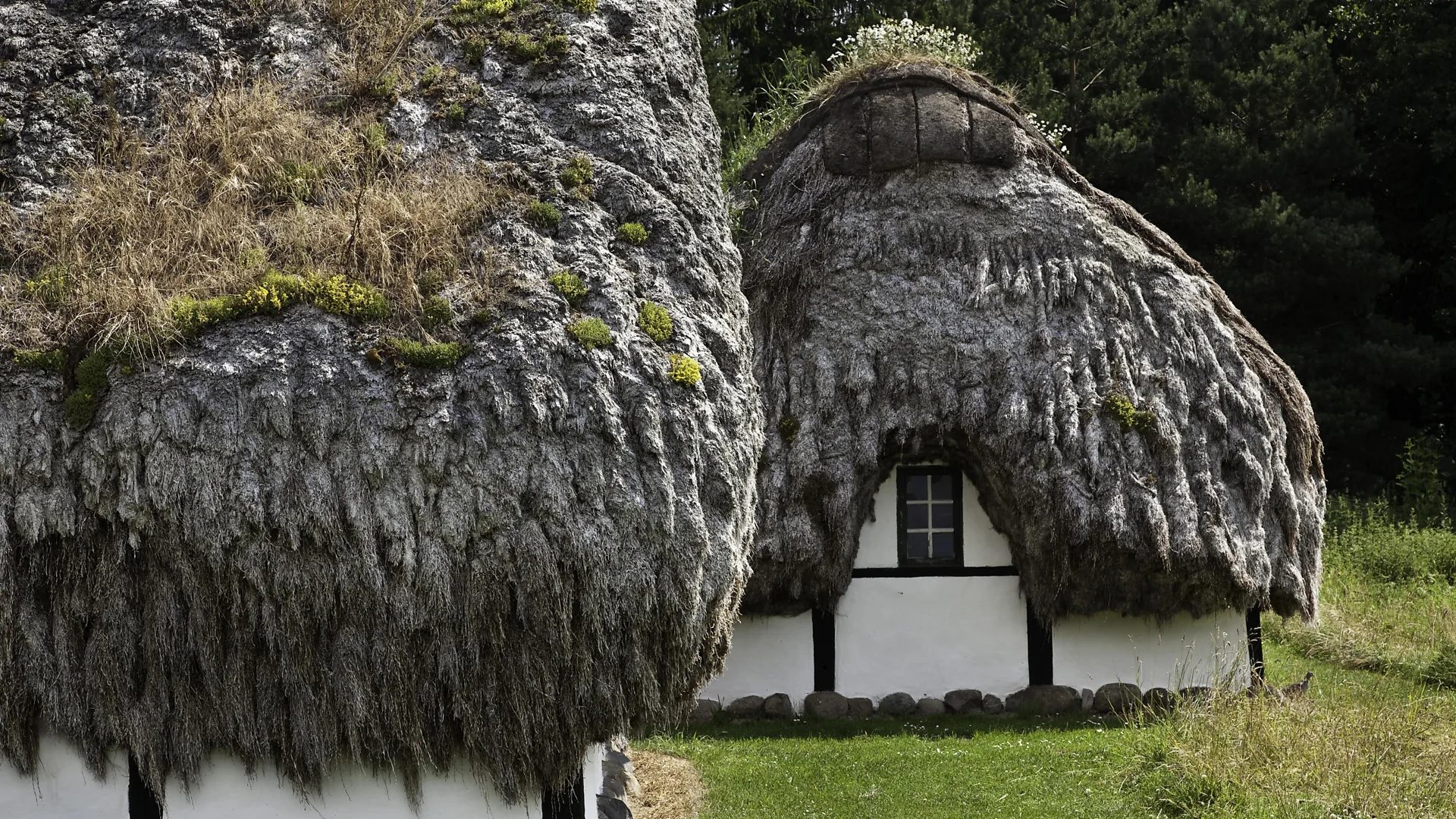
19 kilometers off the coast of continental Denmark sits the island of Læsø. This island is known for a few things, such as being surrounded by shipwrecks, being the home of the giant Ægir in Norse mythology and the silvery seaweed used to thatch many of its homes.
These roofs, which you can still visit today, feature “distinctive dominant gables [which] are adorned with seaweed, up to two metres thick and weighing some 35-40 tonnes, that spills over walls commonly made from local rubble, clay and shipwrecked timbers.”
In an article for BBC, Karen Gardiner reports on the historical origin of this technique:
Seaweed thatching began on Læsø in the 17th Century... Læsø, which had a thriving saltworks industry, had been deforested – trees were burned to feed the salt kilns – so islanders needed to find an alternative roofing material. The island itself has scant resources and, consisting largely of mud flats and sand banks, is difficult to cultivate, so residents looked to the sea.
And the benefits of using seaweed as a roofing material extended beyond just convenience. The seaweed used on these homes is specifically eelgrass, which provides natural fire-, rot- and pest- resistance. It also “becomes fully waterproof after about a year and has insulation properties comparable to those of mineral wool, a dense, fibrous material made from molten glass, stone or industrial waste.” And the true testament of its strength is the fact that you can still find 36 seaweed-roofed houses on Læsø, including one that is now over 300 years old!
Jiāodōng, China
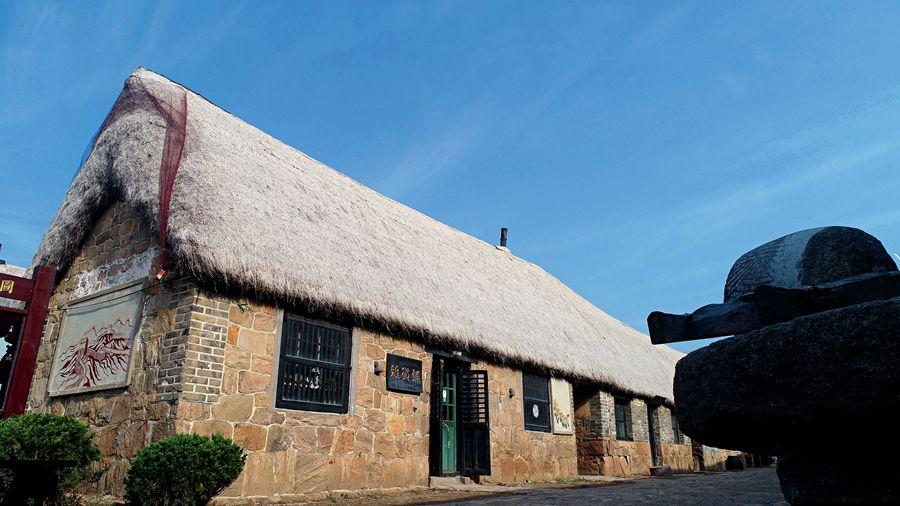 Across the world from the roofs of Læsø, specifically in coastal communities along the 胶东半岛 (Jiāodōng Peninsula) in China’s 山东 (Shāndōng) province, you can find more seaweed being used for roofs. In the same article, Yi Liu, Weijun Gao and Xingtian Wang trace the origin of these seaweed structures back to the Qin and Han dynasties:
During the Qin and Han dynasties, ancient Chinese architecture also significantly expanded. The construction technology of seaweed houses became increasingly mature, and the pattern and appearance were shaped... Seaweed houses flourished in the Yuan, Ming and Qing dynasties [and] most of the existing seaweed houses[today] were preserved or inherited from this period.
Interestingly, while the benefits of seaweed as a construction material are quite similar between Jiadong and Læsø (resistance to pests, mold, fire and water intrusion) the construction of these seaweed roofs varies quite a bit from the roofs of Læsø. Guo Zhidong describes the Jiadong construction method in an article for China Today:
Kelp is the material used to cover the roof (the amount of seaweed used to build a house can exceed 5,000 kilograms) and the material for building the walls of the house is stone... Due to the fact that the coastal area is rich in rainfall, the roofs are all designed with herringbone slope pattern, with the gradient being about 50 degrees, and relatively high ridges. The highest point reaches up to four meters, which makes it easy for rainwater to flow down along the steep slope of the roof. This design can also alleviate the pressure of the winter snow on the roof.
The modern perspective
Today, interest in seaweed as a building material has resurfaced. In 2022, Chinese researchers pursued the study of the thermal environment parameters of a seaweed house in a village in Shandong, 大庄许家 (Dàzhuāng Xǔjiā), with the goal of determining the viability of traditional seaweed construction as a modern solution to rising carbon emissions and the need for sustainable building materials. In Læsø, native islander Henning Johansen and a team of five other thatchers have been relearning to build seaweed roofs since 2012.
Globally, individuals like Copenhagen-based American architect Kathryn Larsen are exploring the possible ways that materials like seaweed can be incorporated in modern architecture. As Kathryn told Imagine5, “Building construction creates 40% of the world’s carbon dioxide emissions and it is one of the most polluting industries as a whole. Using seagrass can be a sustainable solution... [It] is a great fire-resistant natural resource, because of the salt and provides incredible longevity.”
Original image sources (in order of appearance): ChinaDaily, BBC, China Today
About the author

Emma is the senior content developer at The Coffee Shops and AskARoofer™. When she's not working or overthinking everything a little bit, she enjoys watching movies with friends, attending concerts and trying to cook new recipes.
Recommended For You

How cool roofing can help reduce energy costs
Read More ...
The Vinyl Sustainability Council Joins Forces With IB Roof Systems
Read More ...
How Millennium PG-1 EF ECO2 is driving sustainable change
Read More ...
UP TO THE MINUTE





Comments
Leave a Reply
Have an account? Login to leave a comment!
Sign In